What is a chatbot? A plain-English guide for businesses
What a chatbot is, how rule-based and AI chatbots differ, real business examples, and where a chatbot helps — or doesn't. A practical guide, no jargon.
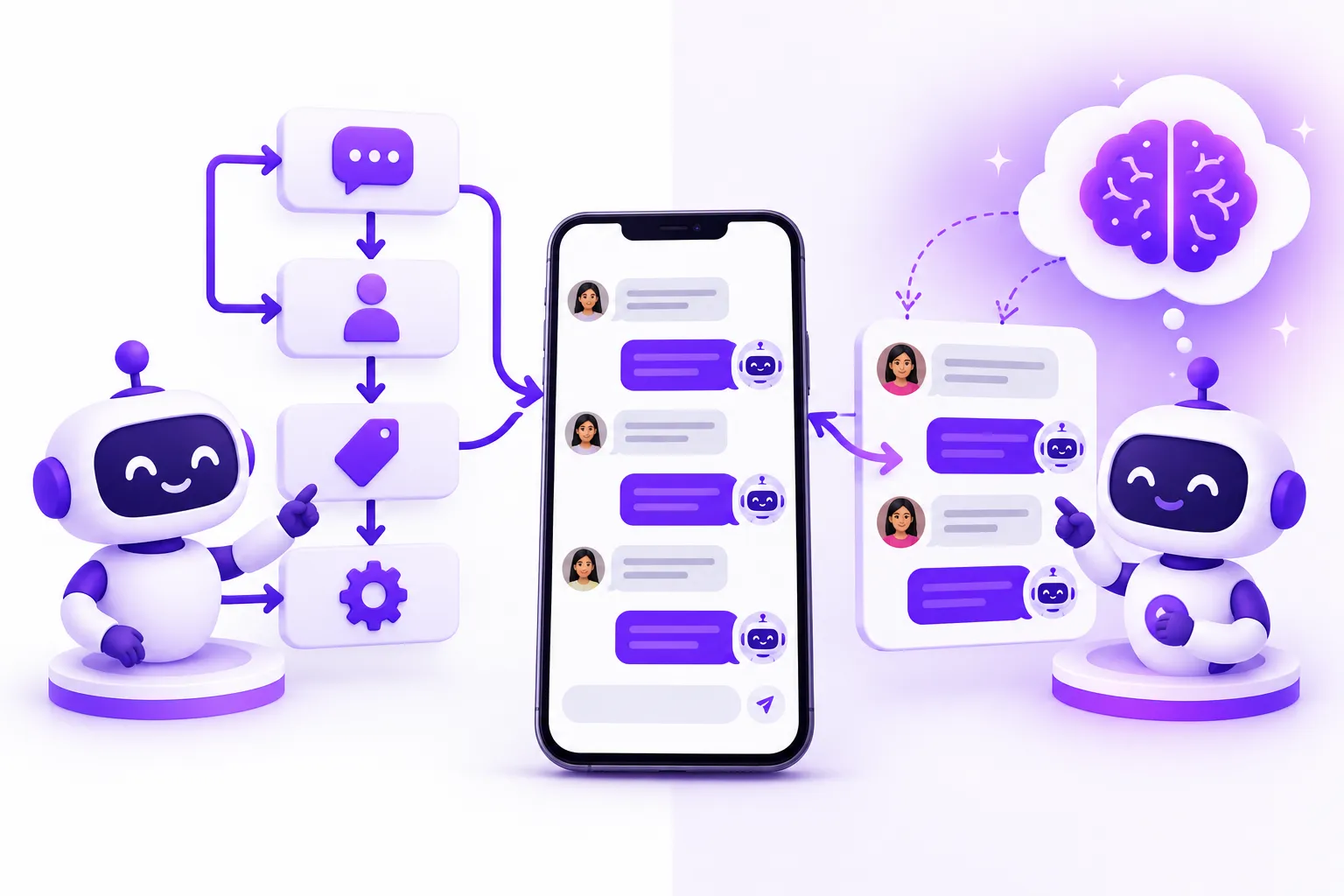
A chatbot is software that replies to messages automatically, so a person doesn't have to type every answer. It can sit on a website, inside an app, or on a messaging channel like WhatsApp, Messenger or Instagram. Some follow fixed rules; some use AI to understand free-form text. Either way the purpose is the same: answer quickly, at any hour, without a queue.
The two types of chatbots
Rule-based chatbots reply when a message matches something you defined — a keyword, a button tap, or the first message in a conversation. The answer is fixed and predictable. They are cheap to run, easy to set up and never invent anything, which is why most business automation still runs on rules.
AI chatbots read the message, work out what it means and write a reply, usually drawing on information you've supplied such as FAQs or product details. They handle questions no rule anticipated, but they need good source material and someone checking their answers — especially in the first weeks.
In practice the two are combined: rules for the questions you can predict, AI for the long tail, and a person for everything sensitive.
Chatbot vs conversational AI
“Chatbot” is the umbrella term for any automated replier. “Conversational AI” describes systems that understand natural language and keep track of a back-and-forth. All conversational AI is a chatbot; a simple keyword bot is a chatbot but not conversational AI.
How a chatbot works, step by step
- A customer sends a message, comment or button tap.
- The platform passes it to the chatbot (on Instagram, through the official API).
- The chatbot checks it against its rules, or its AI model interprets it.
- It sends the matching reply — text, a link, buttons or a product card.
- Anything it can't handle is left for a person in the inbox.
Real chatbot examples for businesses
- Comment to DM: a shop posts a reel, people comment “price”, and each one gets the price and a buy link by DM within seconds. See comment-to-DM automation.
- Story replies: someone replies to a story and instantly receives the offer link. See story reply automation.
- FAQ answers: timings, location, delivery areas answered automatically in DMs. See chatbots for customer service.
- Lead capture: a property enquiry bot sends the brochure and saves the buyer's phone number. See real estate on Instagram.
Benefits — and the limits
The benefits are speed, consistency and coverage: every question gets an answer, including the ones that arrive at midnight or in a flood after a reel takes off. The limits are just as real. A chatbot should not handle complaints, refunds or negotiations, and it should never pretend to be a person. Use it to answer the repeat questions fast, and keep a human on the rest.
Best practices
- Start with the ten questions you actually get; automate those first.
- Keep replies short and give one clear next step — a link or a button.
- Test from a second account before going live.
- Read the conversations in your inbox weekly and fix replies that miss.
- Only message people who contacted you first.
Want to build one for Instagram without code? The JaldiDM chatbot builder is free for 7 days.
Frequently asked questions
What is a chatbot, in one line?
Software that replies to messages automatically — on a website, an app, WhatsApp, Instagram or Messenger — so a person doesn't have to type every answer.
What are the two main types of chatbots?
Rule-based chatbots reply when a message matches a rule you set (a keyword, a button tap, a first message) and always send the same answer. AI chatbots read the message, work out what it means and write a reply. Most real businesses use rules for predictable questions and keep a human, or AI, for the rest.
Is a chatbot the same as conversational AI?
Not quite. 'Chatbot' is any automated replier, including simple rule-based ones. 'Conversational AI' means the system understands free-form language and can hold a back-and-forth. Every conversational AI is a chatbot; not every chatbot is conversational AI.
What is a good example of a business chatbot?
A shop posts a reel; people comment 'price'; within seconds each of them gets a DM with the price and a buy link. That is a rule-based Instagram chatbot — no AI needed, and it answers hundreds of comments the owner would otherwise miss.
When should a business not use a chatbot?
For complaints, refunds, negotiations and anything where the customer is already upset. A chatbot should answer the repeated questions fast and hand the rest to a person — not pretend to be one.
Keep reading
Try JaldiDM free for 7 days
Instagram-first DM automation on the official Meta API. No credit card. Setup in under 5 minutes.
Start Free Trial